Skip to the main content

We turn what you know about NHS Continuing Healthcare assessments into a firm that wins funding for families, with you as its partner.

You check the evidence, sign each appeal and attend the meetings. Our technology finds the families and reads every page of the care records, and we find the clients and handle the billing and admin.

Earn an extra income as the partner in a Continuing Healthcare appeals firm, without the hassle of running one.

  • You pay nothing to join.

    We fund the build, the systems and the marketing.

  • You own real shares as a partner.

    You are a partner in the firm, not an employee.

  • You are paid for every case you sign.

    Each case reaches you already prepared.

  • No clients to find and no paperwork to fill in.

    Our technology finds the families and reads every page of the care records.

  • You choose your cases and your hours.

    Cases come in all year, and you attend meetings by video or in person.

  • You are the only nurse partner we work with for this firm in England.

More families in England are being told no to NHS Continuing Healthcare than ever, and many of those decisions can be appealed.

  • 1

    Eligibility at a standard assessment fell from 31.25 percent in 2017 to 16.65 percent in early 2026.

  • 2

    Under the same rules, Gloucestershire found 2.26 percent of standard assessments eligible, while Cambridge and Peterborough found 35.37 percent.

  • 3

    Nearly 30 percent more people are losing NHS-funded care at reassessment, with no change to the rules.

  • 4

    Over 50,000 people in England are eligible across the Standard and Fast Track streams.

  • 5

    Specialist firms bill 40 to 60 hours for a typical case, and most of that time goes on reading care records.

  • 6

    A retrospective claim takes about 24 months to reach a panel, so families who start late wait longer for a refund.

Book 15 minutes with Adam

Families need what only a nurse who has scored the Decision Support Tool knows: how each of the 12 care domains is really scored.

  • You know which notes in the care records count as evidence for each domain, and which do not.

  • You know where an assessment scored a domain too low, and how to show it in the appeal.

  • You know the DST meeting is where many cases are won, and you attend it for the family.

  • You know how each area's team scores, and why the same rules give such different results.

Book 15 minutes with Adam

Your only job is the expert judgement, while we find the families, prepare the work and run the firm.

You check the evidence, sign each appeal and attend the meetings.

  • Check the evidence against each domain.
  • Decide which cases go forward.
  • Sign each appeal.
  • Attend the DST meetings and panels, by video or in person.

We do all the work of finding the families and preparing every case.

  • Find families refused at the Checklist or the DST.
  • Sign families up online with a written agreement.
  • Collect the care home notes, GP letters and the DST.
  • Map every note to the 12 care domains.
  • Draft each appeal and retrospective claim.
  • Run the firm's website, systems, billing and admin.

Our technology prepares every case, and you check it, sign it and follow it from one place.

  1. 1

    New cases arrive already prepared for your judgement.

    The technology finds the clients, gathers the documents and builds the evidence first.

    Your firm: new cases
    Example

    Arrived this week, already prepared

    • Joan R., nursing homeSurrey. Negative checklist, family wants a review.Care notes requested
    • Derek W., at homeLeeds. DST found no primary health need.Appeal drafted
    • Edith M., care homeNorfolk. Retrospective claim for 2 years.Records sorted
    • Arthur B., hospital dischargeBristol. Fast track refused.Evidence ready
  2. 2

    Each case reaches you as a finished draft to check and sign.

    You make the call that needs an expert, and your signature sends it.

    For your review
    Example

    Draft prepared for you

    Local resolution appeal: Derek W.

    Behaviour

    Scored moderate. Care notes show daily aggression needing two staff, which is high.

    Cognition

    The DST left out the night notes showing he cannot recognise risk.

    Primary health need

    Taken together, the nature, intensity and unpredictability of his needs meet the test.

  3. 3

    The client follows their case on their own status page, so nobody chases you for updates.

    Your firm: your case
    Example

    case for

    Derek W.

    1. Records gathered

      Care home and GP notes received

    2. Appeal sent

      Sent to the ICB

    3. Local resolution meeting

      Booked for 22 May

    4. Independent review

      NHS England, if the ICB says no

    5. Funding decision

      Backdated to the date of eligibility

  4. 4

    Your case list shows every case, its stage and what needs you next.

    Your cases
    Example
    ClientWhereStageNext
    • Derek W.LeedsAppeal sentPrepare for local resolution0
    • Joan R.SurreyRecords requestedChase the care home notes1
    • Edith M.NorfolkRecords sortedApprove the retrospective claim2
    • Arthur B.BristolFast track evidence readyCall the discharge team3
    • Peggy L.DevonFunding agreedBackdated funding confirmed4

A family uploads the records, the technology maps them to the domains, you sign the appeal and attend, and the funding decision is made again.

  1. Step 1

    The system finds families who have just been refused NHS Continuing Healthcare for a parent in a care home.

    We do all this work for you

    1
  2. Step 2

    The family signs up online and uploads the care home notes, GP letters and the DST.

    The client does this

    2
  3. Step 3

    The system maps every note to the 12 domains and flags where the scoring fell short.

    We do all this work for you

    3
  4. Step 4

    You check the evidence and decide how the case goes forward.

    You do this

    4
  5. Step 5

    The system drafts the appeal, and you check and sign it.

    We do this together

    5
  6. Step 6

    You attend the meeting or panel, by video or in person.

    You do this

    6
  7. Step 7

    If funding is refused again, the case moves to the next stage, and you are paid for every case you sign.

    We do all this work for you

    7
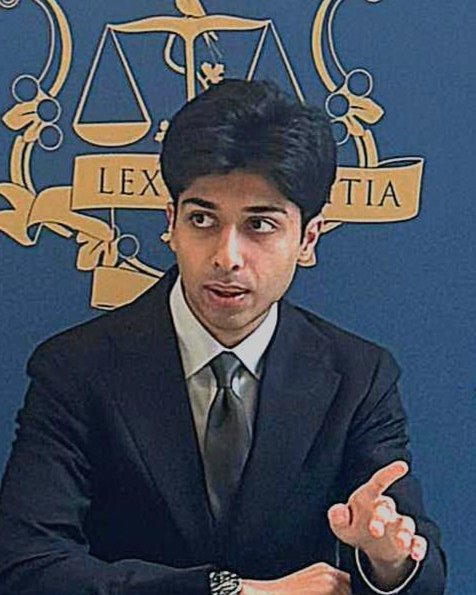
Adam, the founder of Ruskin Morris.

Ruskin Morris was founded by Adam, an AI researcher and entrepreneur who studied Computer Science and Philosophy at Oxford, has started companies in the GovTech and EdTech spaces, and has built businesses for experts including in the financial sector.

We named the company after John Ruskin and William Morris, two Victorian Britons who argued that skilled work deserves to be properly valued and properly paid. That is what we do for experts today.

Here are straight answers to the questions people ask us before they book a call.

Book 15 minutes with Adam
Is this a job?

No. You are a partner with real shares in the firm, not an employee, and you are paid for every case you sign.

Do I pay anything?

No. We fund the build, the systems and the marketing.

Who is this for?

Former NHS Continuing Healthcare nurse assessors, nurses who sat on or chaired DST panels, and CHC-specialist social workers.

Can a nurse represent a family instead of a solicitor?

Yes. Lay advocates are allowed, and panels decide on clinical evidence against the 12 domains.

Do I have to read all the care records?

No. The technology reads the records and maps them to the domains, and you check the evidence and sign.

How am I paid?

Adam goes through the money on the call, and it is all written into the partnership agreement before you start.

Why isn't the firm named after me?

The firm has its own name so it can keep serving clients however much you choose to work. You are named on it as its partner.

Find out how what you know about NHS Continuing Healthcare assessments can become a firm with you as its partner.

Book 15 minutes with Adam